
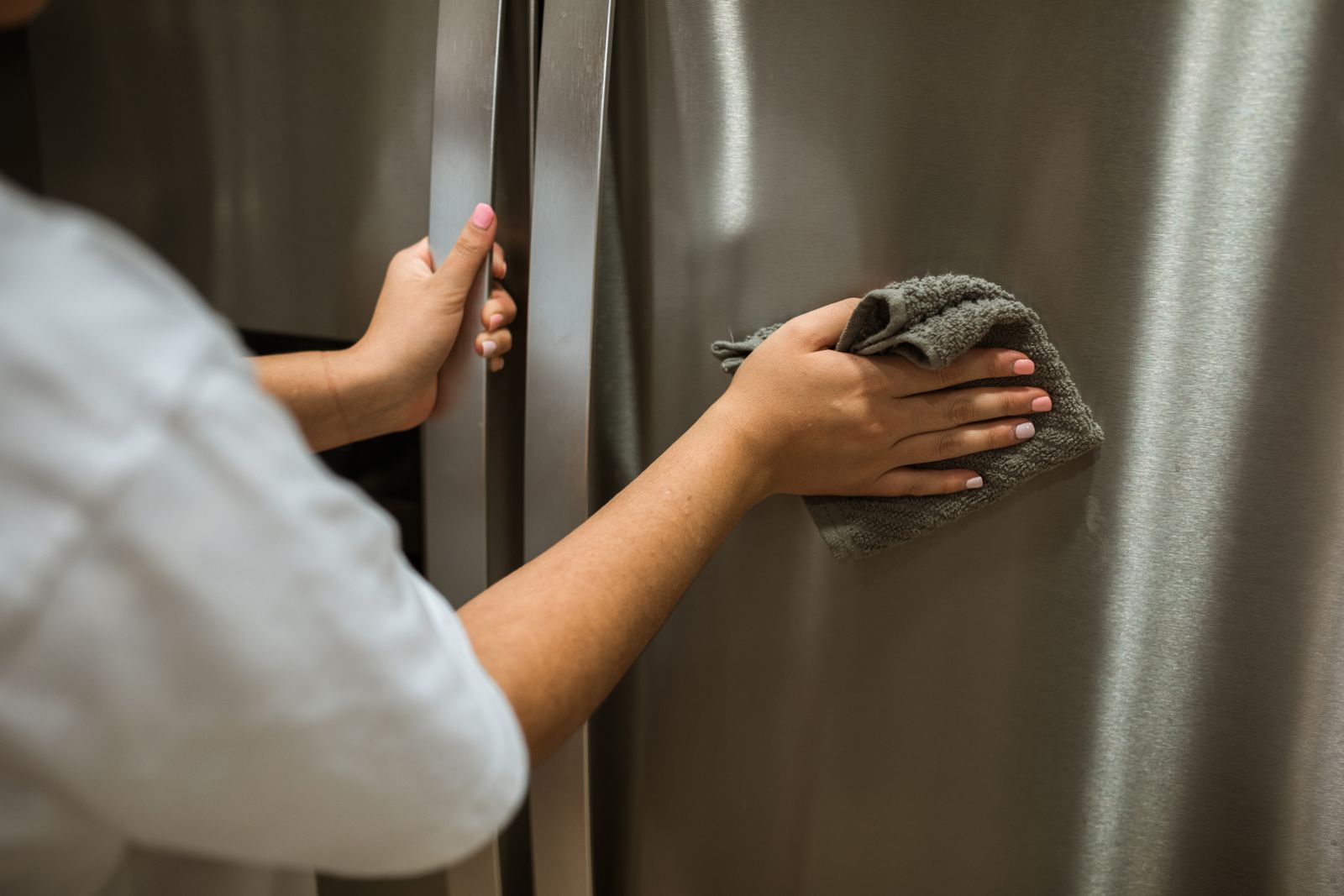
After a food recall, first remove the recalled product and foods that touched it; then wash removable refrigerator parts and interior surfaces with hot, soapy water. Cleaning removes food and germs from the surface. Sanitizing, when recommended, comes after cleaning – not instead of it.
The CDC’s refrigerator-cleaning method is designed for recalled food. Follow the recall notice first because it may identify specific products to discard or give additional instructions for a particular pathogen.
Before you start
- Open the official recall notice and confirm the exact package, lot, UPC, and date.
- Prepare sealed bags, paper towels, hot soapy water, clean cloths, and a cooler or insulated bag.
- Keep children and pets away from the work area.
- Wash your hands before and after handling the recalled item.
- Do not mix bleach with ammonia, vinegar, acids, or other cleaners.
If a person is sick or the recall involves a serious pathogen, avoid spreading contamination to phones, cabinet handles, and faucets. Photograph the product code before disposal and place the phone away from the cleaning area afterward.
Step 1: Remove the recalled food
Put the recalled food in a sealed bag and follow the notice’s return or disposal instructions. The CDC also says to discard other foods that were stored with it or touched it when contamination is possible. Place discarded food in a closed trash container so another person, animal, or wildlife cannot retrieve it.
Do not donate or give away recalled food. If the product leaked, treat the shelf, drawer, packaging around it, and anything contacted by the liquid as part of the cleanup area.
Step 2: Empty the refrigerator safely
Move the remaining food to a clean counter area or cooler. The CDC advises that perishable food should not stay unrefrigerated for more than two hours. Work in sections if the refrigerator is large or the room is warm.
Check other packages as you remove them. Discard food with damaged packaging or direct contamination according to the recall instructions. Wipe the exterior of containers that will return to the refrigerator.
Step 3: Wash shelves and drawers
Remove shelves, drawers, and other detachable parts. Wash them with hot, soapy water, rinse with clean water, and dry with a clean towel. The CDC warns against placing hot water on cold glass because the rapid temperature change can crack it. Let glass parts warm to room temperature first.
Follow the refrigerator manufacturer’s instructions for removing parts and dishwasher use. Heavy shelves can shift suddenly; support them with both hands.
Step 4: Clean the interior
Wipe the refrigerator’s inside walls, floor, ceiling, shelf supports, door bins, and gaskets with hot, soapy water. Pay attention to seams and drainage areas where liquid can collect. Then wipe with clean water and dry using a clean towel.
Clean the door handle, freezer handle, water-dispenser controls, and nearby counter because hands may have touched them while moving the food. Replace heavily soiled disposable sponges or sanitize reusable tools appropriately.
Step 5: Sanitize when appropriate
After cleaning, the CDC gives an optional sanitizing method of one tablespoon of liquid bleach in one gallon of water. Check that bleach is suitable for the surface, use ventilation, wear protection directed by the label, and never combine it with another cleaner. Apply it only after visible dirt and soap residue have been removed.
If your appliance manual prohibits bleach on a material, follow the manufacturer and recall instructions or use an approved alternative. More chemical is not safer; incorrect concentration can damage surfaces and leave residue.
Step 6: Finish without recontaminating the kitchen
- Return clean, dry shelves and drawers.
- Wipe food containers before placing them back.
- Clean the counter or cooler used during the process.
- Wash reusable towels on a hot cycle appropriate for the fabric.
- Wash your hands with soap and water.
- Clean any phone or camera handled during the task according to its manufacturer.
What not to do
- Do not smell or taste recalled food to test it.
- Do not wash recalled produce and put it back.
- Do not spray sanitizer over crumbs, spills, or grease and call the surface clean.
- Do not leave perishable food on the counter for a long deep-cleaning session.
- Do not pour hot water onto cold glass shelves.
- Do not mix cleaning chemicals.
Do you need to throw away everything?
Usually no. Follow the notice and evaluate direct contact or leakage. Sealed containers that did not touch contamination can generally be cleaned on the outside and returned, but the pathogen, package condition, and recall instructions matter. When in doubt, contact the agency or company named in the notice.
If anyone develops symptoms after eating recalled food, contact a healthcare professional and mention the recall. Keep the label photo, purchase information, symptom timeline, and official notice for any report.