
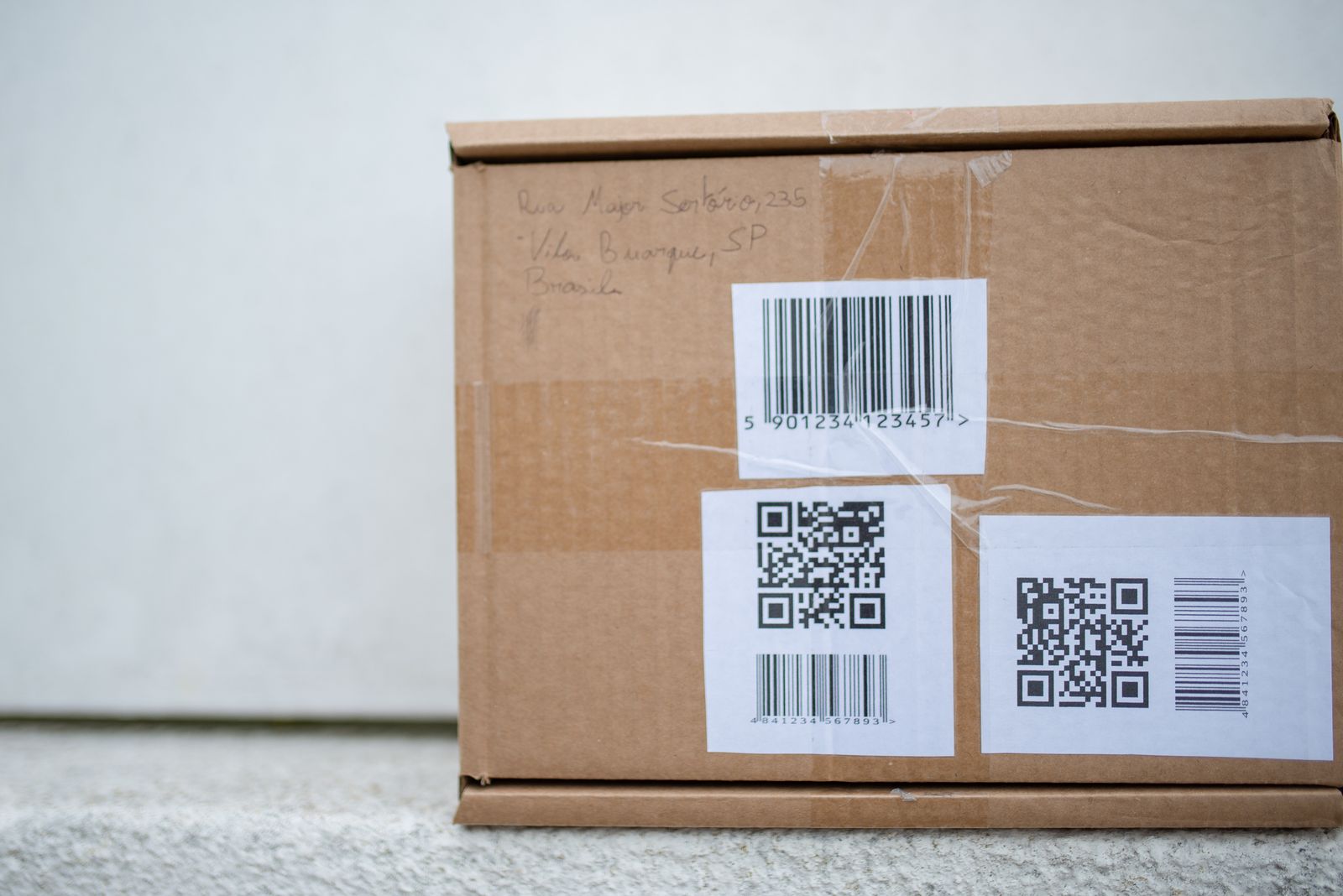
A lot number identifies a production group, a UPC identifies a retail product type, a SKU is an internal seller or manufacturer code, and a best-before date usually describes quality – not recall status by itself. A recall notice may use several of these fields together. Match every field the notice lists before deciding that your package is included or excluded.
Codes are often printed in different places and fonts. Check the front and back label, lid, bottom, neck, side seam, heat seal, cardboard sleeve, and any sticker placed by the retailer. Use bright side lighting and photograph the marking before it rubs off or the package is returned.
What each identifier means
| Identifier | What it usually identifies | Where to look |
|---|---|---|
| Lot or batch number | A production run or group made, prepared, packaged, or labelled under similar conditions | Ink-jet print near a seam, lid, bottom, cap, or date |
| UPC / GTIN | The retail trade item and package configuration | Below or beside the scannable barcode |
| SKU or item number | An internal product code used by a retailer or manufacturer | Price label, receipt, online order, shelf tag, or recall notice; it may not be printed on the package |
| Best-before date | Expected quality of an unopened food under stated storage conditions | Lid, package top or bottom, neck, end flap, or a location named by “BB/MA” text |
| Model and serial number | The design and, often, an individual durable product | Rating plate, underside, rear panel, battery compartment, or settings screen |
How to find a lot number
Look for labels such as LOT, BATCH, L, BN, or a short unexplained string beside the date. The Canadian Food Inspection Agency says a lot code can be numeric, alphabetic, or alphanumeric and can take many forms. There is no universal consumer format. A company may use a date as part of the lot code, but do not assume every date is the lot.
On flexible bags, the code may be lightly printed along the top or bottom seal. On tubs and bottles, it may be on the rim, lid, shoulder, or base. On a multipack, compare both the outer carton and the individual containers because the recall may specify one or the other.
How to read the number below a barcode
The human-readable digits below a UPC barcode let you compare the code even when a phone cannot scan it. Ignore spaces inserted for readability and compare the complete sequence. A different final digit or package-size code can indicate a different retail item.
GS1 explains that the GTIN is the identification number and the UPC is a barcode format that carries it. In everyday recall notices, “UPC” often means the printed digits under the barcode. Follow the terminology and formatting used by the official notice rather than trying to reconstruct a code from a partial image.
Why a SKU may be harder to find
A SKU is not a universal public identifier. A retailer can assign one code while the manufacturer uses another. Search the receipt, online order history, membership purchase history, retailer app, shelf label, and recall notice. If the notice calls it an “item number,” use that exact number when contacting the store.
If the package has no visible SKU, do not substitute the UPC. Record both fields separately. A retailer may locate a purchase by membership account or payment card, but that does not change the product-identification test in the recall notice.
Best-before is not the same as expiration or safety
CFIA guidance says a best-before date generally tells consumers how long an unopened food should retain expected quality when properly stored. It is not automatically an expiry date, and it is not automatically a recall code. A recall can nevertheless target specific best-before dates because those dates help isolate affected production.
In Canada, bilingual month symbols can appear in date markings. The package may also state where the date is located, such as “BB/MA see bottom.” Preserve letters, spaces, punctuation, and adjacent plant or line codes in your photo because the notice may need the entire string.
A reliable package-matching process
- Open the current official recall notice.
- Match the brand and exact product name.
- Match the size, count, flavour, and package type.
- Compare the complete UPC or GTIN.
- Compare the lot, batch, date, model, or serial range exactly as directed.
- Check the named states, provinces, stores, or distribution dates.
- Follow the remedy only after confirming the match – or contact the company if a code is unreadable.
Do not taste food, power on a suspect appliance, or continue using a child product just to determine whether it is recalled. When a code is smeared, isolate the item and contact the manufacturer with photographs, purchase location, and approximate purchase date.
Photograph these details before a return
- The entire front of the product
- The barcode and all printed digits
- The lot, batch, and date code in one sharp frame
- The package size and variety
- The receipt, order number, or retailer item number
- Damage or a safety problem, without creating additional risk
These photographs can support a refund request, an incident report, or a later check if the notice expands. Keep the original packaging until the recall instructions tell you to return or discard it.